Chainlink Explained: What Are Crypto Oracles and Why They Matter
 3 months ago
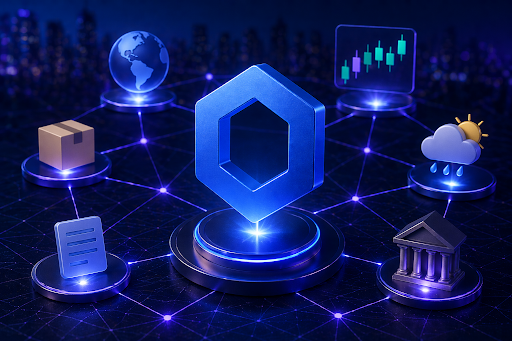
Blockchain technology has transformed how we think about trust and transactions. But there’s one major limitation—blockchains can’t access real-world data on their own. That’s where Chainlink comes in.
Chainlink solves a critical problem in the crypto space by connecting smart contracts to real-world information. In this guide, we’ll break down what Chainlink is, what crypto oracles do, and why they’re essential to the future of blockchain.
What Is Chainlink?
Chainlink is a decentralized oracle network that enables blockchains to securely interact with external data sources, APIs, and payment systems.
In simple terms, Chainlink acts as a bridge between blockchain and the real world.
Without Chainlink, smart contracts would only be able to access data within their own network limiting their usefulness in real-world applications.
What Are Crypto Oracles?
Crypto oracles are services that provide external data to blockchain-based smart contracts.
Blockchains are secure and reliable, but they are also isolated systems. They can’t directly access:
- Price feeds (e.g., ETH/USD)
- Weather data
- Sports results
- Real-world events
Oracles solve this problem by delivering that data to the blockchain in a secure and verifiable way.
Why Do Oracles Matter?
Oracles are essential because they unlock the full potential of smart contracts.
Without oracles, smart contracts would be limited to simple, closed-system operations. With oracles, they can interact with real-world conditions and execute automatically.
For example:
- A DeFi platform can use price feeds to manage loans
- An insurance contract can trigger payouts based on weather data
- A betting platform can settle wagers based on real-world results
This makes blockchain technology far more practical and powerful.
How Chainlink Works
Chainlink uses a decentralized network of nodes to fetch, verify, and deliver data to smart contracts.
Here’s a simplified breakdown:
- A smart contract requests external data
- Chainlink nodes retrieve that data from multiple sources
- The data is verified and aggregated
- The final result is delivered back to the smart contract
This decentralized approach ensures that no single source can manipulate the data.
What Makes Chainlink Different?
Several features set Chainlink apart from other oracle solutions:
Decentralization
Instead of relying on a single data provider, Chainlink uses multiple nodes to ensure accuracy and security.
Reliable Data Feeds
Chainlink aggregates data from various trusted sources, reducing the risk of errors or manipulation.
Security and Trust
Its network design minimizes single points of failure, making it highly reliable for critical applications.
Wide Adoption
Chainlink is widely used across DeFi, gaming, insurance, and enterprise blockchain projects.
What Is the LINK Token?
The LINK token is the native cryptocurrency of the Chainlink network.
It is used to:
- Pay node operators for providing data
- Incentivize honest and accurate reporting
- Secure the network through staking mechanisms
As demand for oracle services grows, the utility of LINK increases alongside it.
Real-World Use Cases of Chainlink
Chainlink powers a wide range of blockchain applications:
DeFi (Decentralized Finance)
Protocols rely on accurate price feeds to manage lending, borrowing, and trading.
Insurance
Smart contracts can automatically process claims based on real-world events.
Gaming and NFTs
Oracles can provide randomness or external data for in-game mechanics.
Enterprise Solutions
Businesses use Chainlink to connect legacy systems with blockchain networks.
Why Chainlink Is Important for the Future of Blockchain
As blockchain technology evolves, the need for reliable external data becomes even more critical.
Chainlink plays a key role by:
- Expanding what smart contracts can do
- Enabling real-world use cases
- Increasing trust in decentralized systems
Without oracle networks like Chainlink, many of today’s blockchain innovations wouldn’t be possible.
Challenges and Considerations
While Chainlink is a leading oracle solution, there are still challenges to consider:
- Dependence on data sources outside the blockchain
- Competition from other oracle networks
- Complexity for new users
Despite these challenges, Chainlink continues to grow as a core part of the blockchain ecosystem.
Final Thoughts
Chainlink is solving one of the most important problems in crypto—bringing real-world data onto the blockchain.
By enabling secure and reliable communication between smart contracts and external systems, Chainlink is helping unlock the true potential of decentralized technology.
As adoption increases, crypto oracles will become a foundational layer of the digital economy and Chainlink is leading the way.