Tokenization Explained: How Real-World Assets Are Moving On-Chain
 3 months ago
For decades, ownership has been tied to:
- Paper documents
- Banks and intermediaries
- Limited access and high barriers
But now, a new concept is gaining momentum: Tokenization. It’s not just a buzzword, it’s a shift in how assets are created, owned, and traded powered by blockchain.
What Is Tokenization (Simple Explanation)
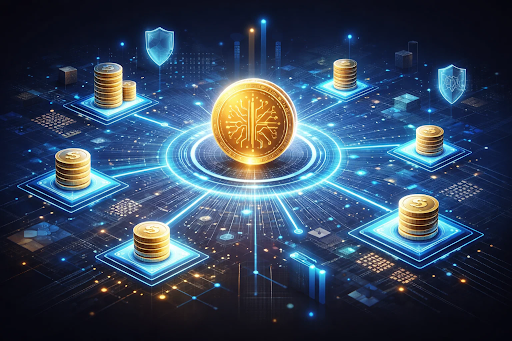
Tokenization is the process of converting real-world assets into digital tokens on a blockchain.In simple terms: A physical or traditional asset, gets represented digitally and can be owned or traded on-chain
These tokens can represent:
- Real estate
- Stocks and bonds
- Commodities
- Art and collectibles
What Does “On-Chain” Actually Mean?
When something is “on-chain,” it means:
- Ownership is recorded on a blockchain
- Transactions are transparent
- No central authority controls it
This creates:
- Trust through technology
- Reduced reliance on intermediaries
- Faster, more efficient transactions
Why Tokenization Is Gaining Attention Now
Tokenization isn’t new, but it’s becoming relevant now because:
1. Blockchain Technology Has Matured
Networks are faster, cheaper, and more scalable than before.
- Institutional Interest Is Growing
Banks and financial institutions are exploring tokenized assets.
- Demand for Access Is Increasing
People want easier ways to invest in assets that were previously restricted.
How Tokenization Works (Step-by-Step)
Let’s simplify the process:
- A real-world asset is identified (e.g., property)
- Legal structure is created to represent ownership
- Digital tokens are issued on a blockchain
- Investors can buy, sell, or trade these tokens
Each token represents a portion of the asset.
Real-World Examples of Tokenization
1. Real Estate
Property ownership can be split into digital shares, instead of buying a full property, you can own a fraction.
- Stocks and Bonds
Traditional financial instruments can be traded on blockchain platforms.
- Art and Collectibles
High-value items can be divided into smaller ownership units.
- Commodities
Assets like gold can be tokenized and traded digitally.
The Role of Blockchain Platforms
Tokenization is powered by networks like Ethereum and high-performance ecosystems such as Solana.
These platforms provide:
- Smart contracts
- Security
- Transparency
They act as the infrastructure for tokenized assets.
Why Tokenization Matters
Tokenization solves several key problems:
1. Accessibility
Anyone can invest in assets globally.
- Liquidity
Assets that were hard to sell become easier to trade.
- Transparency
Ownership and transactions are visible on-chain.
- Efficiency
Fewer intermediaries mean faster processes and lower costs.
What Most People Are Missing
Many people see tokenization as just another crypto trend, but it’s bigger than that.
It connects:
- Traditional finance
- Blockchain technology
- Real-world assets
This creates a bridge between two worlds that were previously separate.
Challenges Tokenization Still Faces
Despite its potential, tokenization isn’t perfect. Key challenges include:
- Regulatory uncertainty
- Legal complexities
- Adoption barriers
These need to be solved before mainstream adoption.
The Bigger Picture: Finance Is Going On-Chain
Tokenization is part of a larger shift:
From:
- Centralized ownership → Decentralized ownership
- Illiquid assets → Liquid markets
- Limited access → Global participation
This isn’t just about crypto, it’s about the future of finance.
Final Thoughts
Tokenization is quietly transforming how assets work. It’s making ownership:
- More accessible
- More flexible
- More efficient
The biggest impact may not happen overnight, but over time, more assets will move on-chain and change how we invest forever.