Ripple Network Explained: Why Banks Are Interested in XRP
 3 months ago
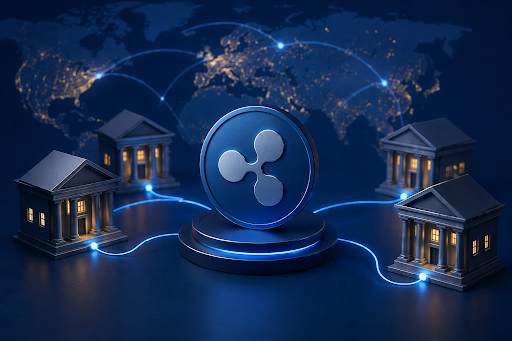
The global financial system is evolving and fast. Traditional cross-border payments are often slow, expensive, and inefficient. That’s where XRP and the Ripple Labs network come into play.
Ripple has positioned itself as a bridge between traditional banking and blockchain technology, offering faster and cheaper international transactions. But what exactly is the Ripple network—and why are banks paying attention?
What Is the Ripple Network?
The Ripple network, often referred to as RippleNet, is a digital payment system designed to enable fast, low-cost international money transfers.
Unlike decentralized networks like Bitcoin, Ripple focuses on working with financial institutions, not replacing them.
At its core, RippleNet connects:
- Banks
- Payment providers
- Financial institutions
It allows them to send money globally in seconds instead of days.
What Is XRP and How Does It Fit In?
XRP is the native digital asset of the Ripple ecosystem. Its primary role is to act as a bridge currency in cross-border transactions.
Simple Example:
- A bank in the UK wants to send money to Japan
- Instead of converting GBP → USD → JPY
- It converts GBP → XRP → JPY
This reduces both time and cost, making transactions more efficient.
Why Traditional Banking Systems Are Slow
Before understanding Ripple’s value, it’s important to look at the current system—especially networks like SWIFT.
Traditional cross-border payments:
- Can take 1–5 business days
- Involve multiple intermediaries
- Have high fees and hidden costs
- Lack transparency in tracking
This inefficiency creates a major opportunity for blockchain-based solutions like Ripple.
How Ripple Solves These Problems
Ripple offers a more modern approach to payments by delivering faster, more efficient, and transparent transactions. Unlike traditional systems that can take days to settle, Ripple transactions are completed within seconds, typically in just 3–5 seconds. This speed is paired with significantly lower costs, as the network removes the need for multiple intermediaries that usually drive up fees. Additionally, XRP enables instant global liquidity, eliminating the requirement for banks to maintain pre-funded accounts in different currencies. On top of that, Ripple provides real-time transaction tracking, giving users and institutions full transparency throughout the payment process.
Why Are Banks Interested in XRP?
Banks are increasingly interested in XRP because it offers clear advantages over traditional financial systems. One of the main benefits is cost efficiency, as banks can significantly reduce transaction expenses by eliminating intermediaries. In addition, XRP provides a strong speed advantage, with near-instant settlement times that enhance both customer experience and operational efficiency. It also helps with liquidity optimization by removing the need for banks to hold large reserves in foreign currencies, freeing up capital for other uses. Furthermore, growing regulatory clarity around XRP in certain markets has boosted institutional confidence, making it a more attractive option for financial institutions exploring blockchain-based solutions.
Ripple vs Traditional Systems
| Feature | Ripple (XRP) | Traditional Banking (SWIFT) |
| Speed | Seconds | 1–5 days |
| Cost | Low | High |
| Transparency | High | Limited |
| Intermediaries | Minimal | Multiple |
Is Ripple Competing With Banks?
Not exactly. Unlike many crypto projects aiming to disrupt banks, Ripple Labs is focused on collaboration. Its goal is to upgrade the existing financial system, not replace it entirely. This partnership-driven approach is one of the main reasons banks are willing to explore Ripple’s technology.
Challenges and Considerations
While Ripple offers strong advantages, there are still challenges:
- Regulatory uncertainty in some regions
- Competition from other blockchain payment solutions
- Ongoing debates around decentralization
Despite this, Ripple continues to expand its partnerships globally.
Final Thoughts
The Ripple network represents a significant shift in how money moves across borders.
By combining blockchain technology with real-world financial infrastructure, XRP offers:
- Faster transactions
- Lower costs
- Improved liquidity
For banks, this isn’t just innovation—it’s a competitive advantage.
As global payments continue to evolve, Ripple and XRP are likely to remain key players in shaping the future of finance.